

How To Create Workflow In Powerpoint
For many students, teachers, and professionals, MS PowerPoint is the go-to presentation software—and with good reason. When it comes to creating flowcharts, however, PowerPoint is extremely limited; it simply wasn't designed for that. Lucidchart allows you to create beautiful, complex diagrams easily and quickly. Skip to the next section to see for yourself.
There are two ways to build flowcharts using only PowerPoint: with SmartArt or with the shapes library. This tutorial will cover both methods, touching on some of the pros and cons of each approach.
Create a flowchart with SmartArt
SmartArt graphics are pre-made collections of shapes—very basic, rigid diagram templates, essentially. Using SmartArt to build charts and diagrams can be faster than starting from scratch, but you'll sacrifice flexibility. SmartArt is a great option if you want a quick, simple diagram. It should, however, only be used for the most rudimentary diagrams. SmartArt graphics are clip art images—additional elements can be added, but your options are limited to one or two preselected shapes.
If you choose to use SmartArt to build your diagram, follow these steps:
1. Select a flowchart from the SmartArt drop-down menu
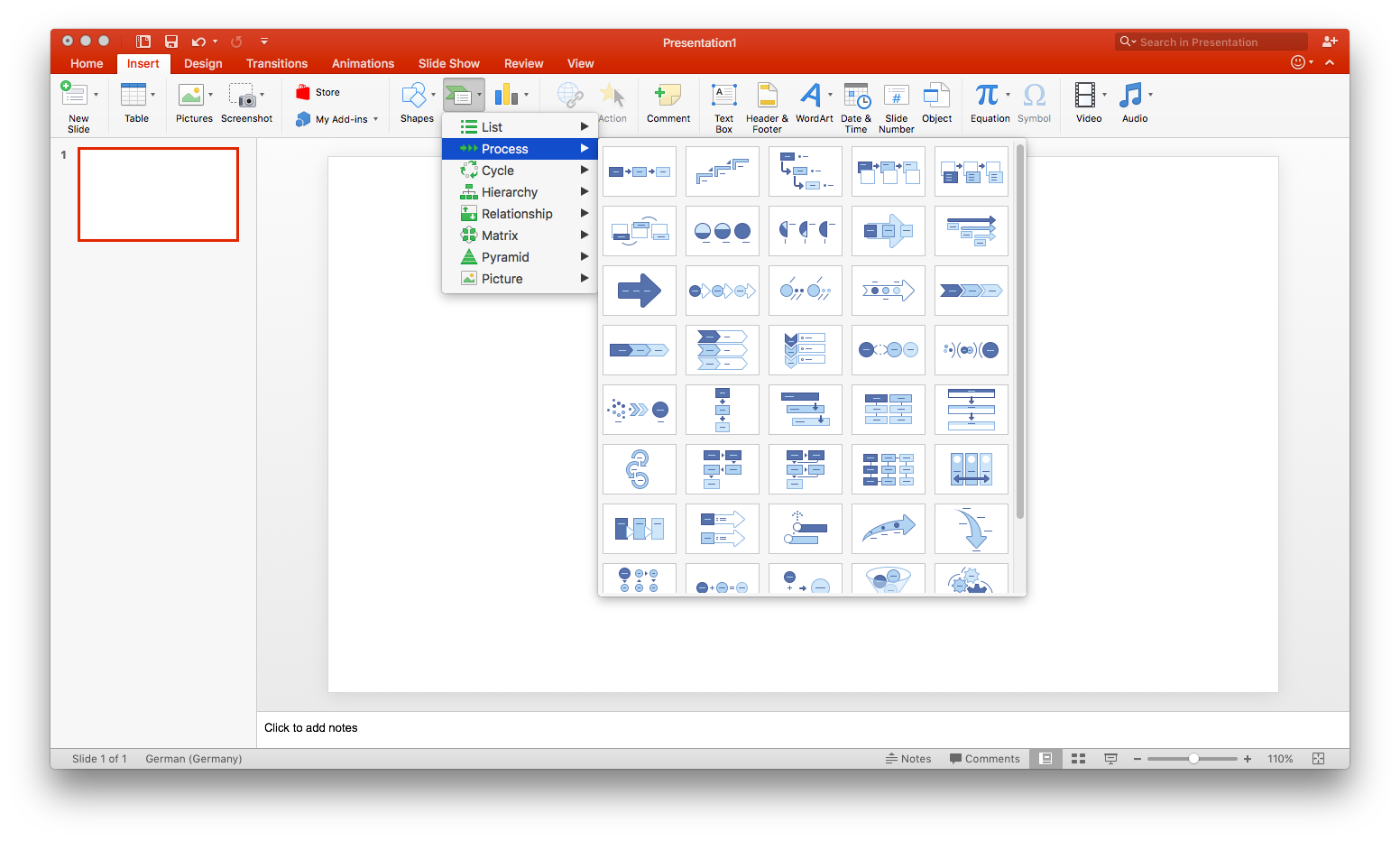
In MS PowerPoint, navigate to the slide where you want to add a flowchart. Click Insert > SmartArt to open a drop-down list with a variety of diagram types. Hover your mouse over "Process" to see the various flowchart options. To insert one of these diagrams, simply click it.
2. Add text and shapes to your flowchart
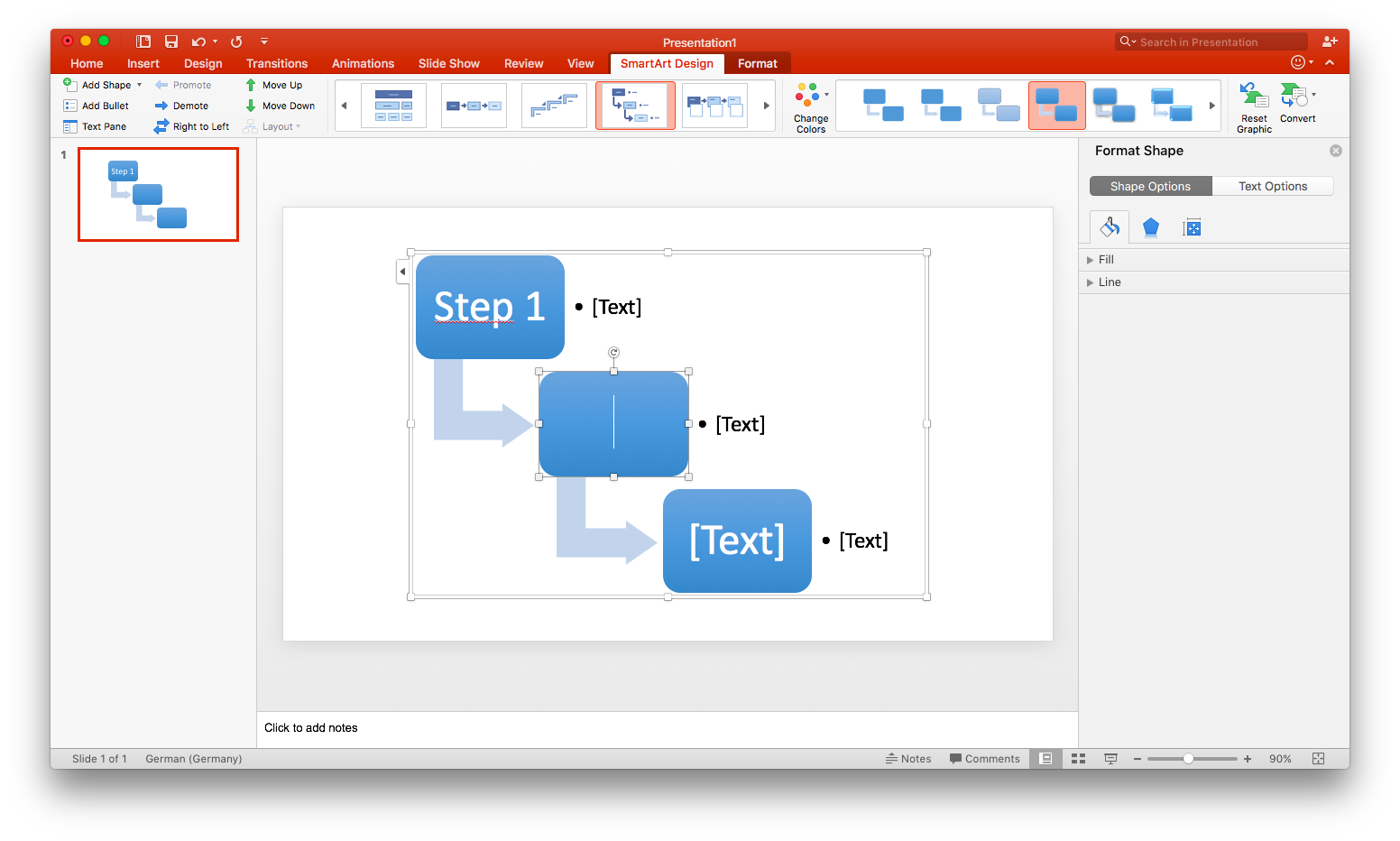
Text can be added to the shapes in your SmartArt graphic by clicking the center of the shape.
To add shapes, select the whole SmartArt graphic and click "Add Shape." (This button is located in the toolbar's upper left corner.) If you move shapes around—to do this, click and drag—the connecting arrows will automatically adjust.
3. Customize your flowchart
When you select your SmartArt graphic, two tabs appear on the toolbar: "SmartArt Design" and "Format." By clicking on the former, you can change the diagram type, choose from a number of preset color schemes, and add shapes. The format tab, on the other hand, allows for more specific customizations, including individual shape color, text color, and font.
Create a flowchart with the PowerPoint shape library
Using the shape library to create a flowchart is substantially slower than using SmartArt because every box and arrow must be added individually. However, this method affords much more flexibility throughout the creation process. Additionally, if you're looking for a traditional flowchart—one with process and decision boxes, and other flowchart-specific shapes—you'll have to use the shape library, as SmartArt doesn't offer any diagrams with these features.
1. Add the necessary shapes
Go to Insert > Shapes. Doing this opens a dropdown menu of PowerPoint's shape libraries—scroll down until you find the flowchart section. There you'll find all the necessary shapes for creating a flowchart, from decision boxes to manual input boxes. To see any shape's function, just hover your mouse over it and a small label will appear.
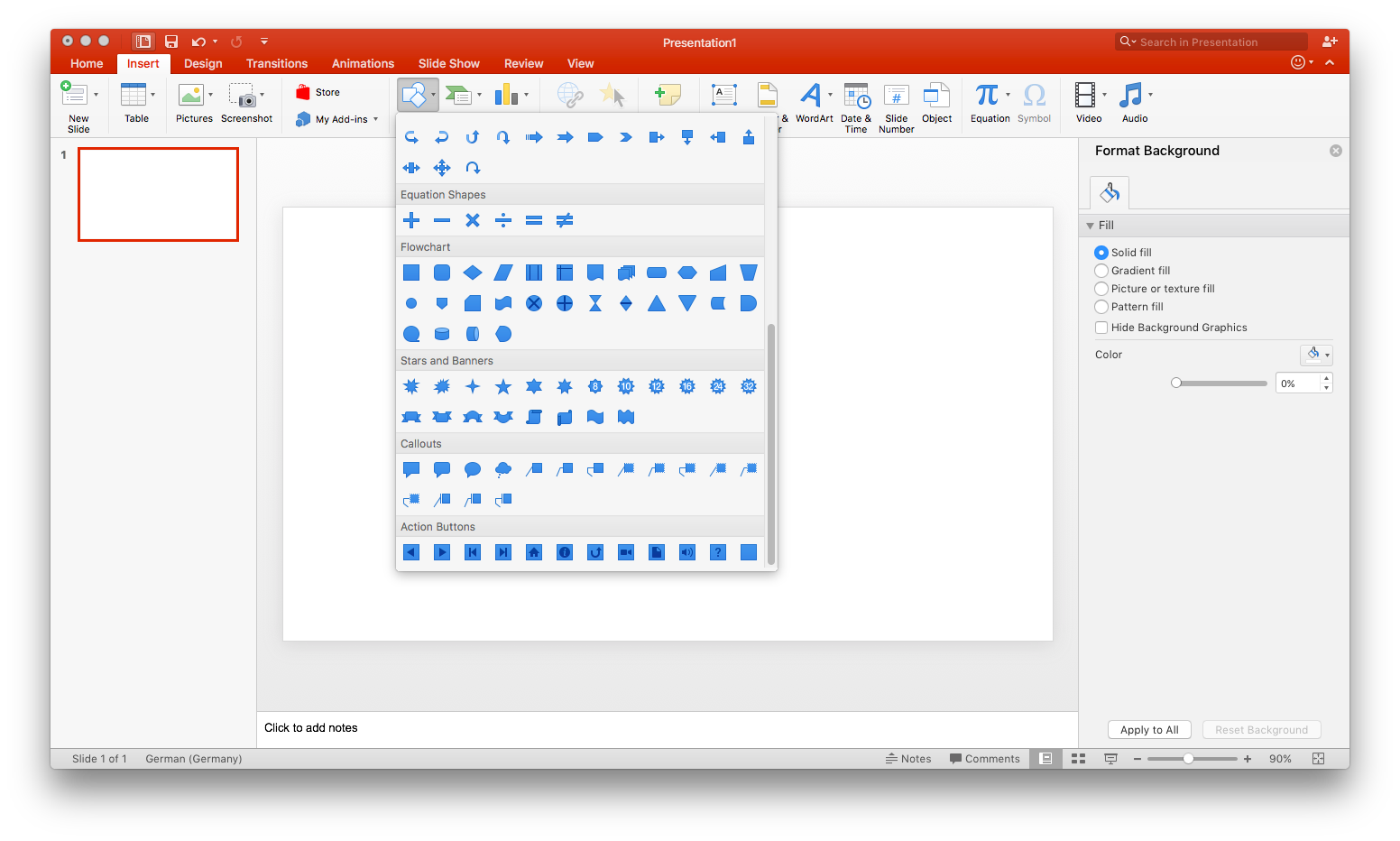
Once you've selected a shape, click and drag your mouse to draw it on the slide. To add more shapes, simply repeat this step from the beginning. (Tip: For shapes that will occur multiple times in your flowchart—such as process boxes—add one and then copy and paste it as required.)
2. Add connecting lines
A key feature of any flowchart is connecting arrows—after all, it's these arrows that illustrate the diagram's "flow" or relationship(s) to the other shapes in your diagram. As with the previous step, to add lines, go to Insert > Shapes. The arrows can be found in the lines section.
After selecting a line type, click and drag your mouse from one shape to another to draw a connecting line.
3. Label your shapes and lines
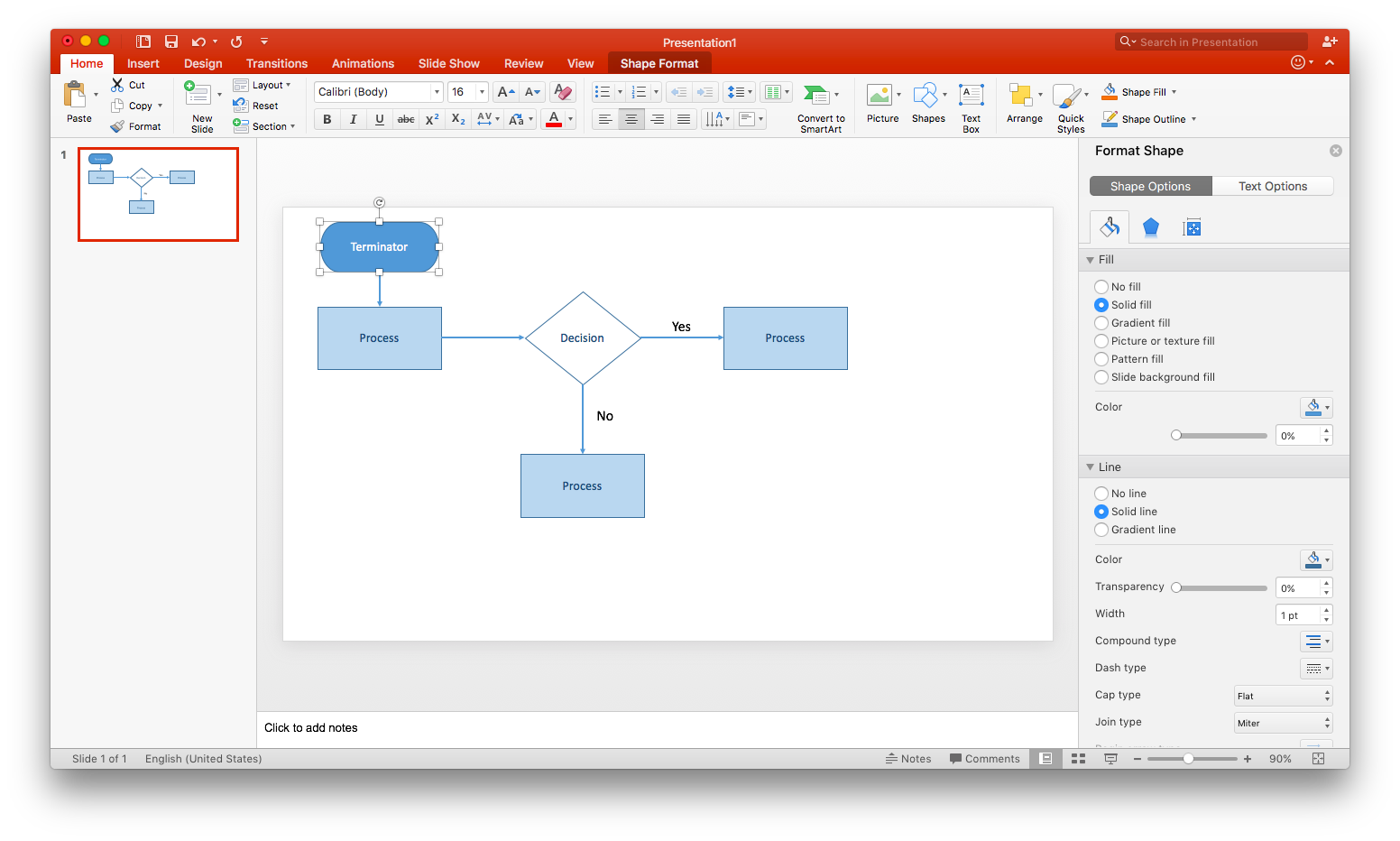
To add text to an existing shape, simply select the shape and begin typing. If you want to label any connecting lines, you'll have to use text boxes. Go to Insert > Text Box and then click and drag your mouse to draw the text box; type to add text.
4. Customize your flowchart
At this point, every shape and line you've drawn is styled according to MS PowerPoint's presets. If you like the look of your flowchart as is, skip this step.
Nearly every aspect of the shapes in your diagram can be modified in the format shape pane, accessible by double-clicking any shape or line. You can then edit fill color, line weight, opacity, and many other elements of your diagram.
How To Create Workflow In Powerpoint
Source: https://www.lucidchart.com/pages/how-to-make-a-flowchart-in-powerpoint
Posted by: parisiplinted.blogspot.com
0 Response to "How To Create Workflow In Powerpoint"
Post a Comment